The sandwich franchise category is bigger than it first appears. It covers sub shops, delis, fast-casual concepts, and health-forward hybrids. For investors, that variety creates both opportunity and confusion.
This guide walks you through the category from an investor’s lens. You will learn how to read the numbers and spot meaningful differentiation.
Key Takeaways
- The category spans far more than sub shops. Define what you are buying before you compare.
- U.S. restaurant sales are projected to reach $1.55 trillion in 2026, and fast-casual leads on both sales and unit growth.
- Every real cost number lives in the franchise disclosure document (FDD).
- Profitability comes from unit economics, not the concept alone.
- Franchisors must provide a 23-item FDD at least 14 calendar days before you sign or pay.
What Is a Sandwich Franchise?
A sandwich franchise is an arrangement in which an investor buys the rights to operate a proven concept under an established brand. The franchisor provides brand identity, training, and systems. The franchisee provides capital and runs day-to-day operations.
The category is broader than many investors realize. Traditional sub and deli brands sit alongside fast-casual concepts with refined menus, plus health-forward hybrids that blur the line between salads and sandwiches. The soup and sandwich concept is one example.
This range shapes the franchise investment. A legacy sub shop competes on price and speed. A fast-casual brand competes on quality. A health-forward hybrid competes on differentiation. When you evaluate a sandwich franchise opportunity, treat it as an investment decision first.
Why Sandwich Franchises Appeal to Investors Right Now
The broader market gives sandwich franchises a strong foundation. According to the NRA 2026 industry outlook, total restaurant and foodservice sales are projected to reach $1.55 trillion. Operators are forecast to add more than 100,000 jobs in 2026, bringing total industry employment to 15.8 million.
Fast-casual is a strong segment. Per Technomic fast-casual growth data, sales among fast-casual chains rose by 6% to nearly $77 billion. Those same chains grew their units by 5.1%. Brands like Jersey Mike’s rank among the fastest growers.
Consumer demand is also shifting. Per the National Restaurant Association’s 2026 What’s Hot Culinary Forecast, health and wellness rank among the top trends. Consumer demand keeps shifting toward fresher, health-conscious options. Investors evaluating top franchise industries often find that health-forward, fast-casual concepts sit at the intersection of growth and demand.
How Much Does It Cost to Open a Sandwich Franchise?
Costs vary widely. A compact sub shop costs less than a fast-casual location with custom finishes and higher-traffic real estate. The best source for real numbers is the franchisor’s franchise disclosure document.
The FDD breaks down costs into main categories. The franchise fee is a one-time payment. The total initial investment covers buildout, equipment, inventory, and working capital. Ongoing fees include a royalty and an ad-fund contribution.
Do not chase the lowest sticker price. A concept with a higher franchise investment may produce stronger unit economics. Compare initial outlay against the financial performance data the franchisor discloses.
For more on fast-casual costs, see Bread Zeppelin’s overview of franchise investment costs.
Are Sandwich Shops Profitable?
Profitability depends on unit economics. Two sandwich shops in the same city can produce very different results based on how well each operator controls food cost and manages labor.
Concepts with simpler prep lines offer more control. When the menu pulls from a shared ingredient set and follows a repeatable assembly process, food waste drops and labor becomes predictable. That discipline is where margin lives.
Franchisors disclose unit-level financial performance in Item 19 of the FDD. This is where you find reported averages for sales. Talk to current franchisees to understand how those numbers translate to real conditions.
What to Look For When Evaluating a Sandwich Franchise
Before committing capital, investors need a structured approach to due diligence. Start with the FDD to verify the economics. Test whether the brand can win, then confirm the model can scale. All of these should align before you buy a franchise.
Read the Franchise Disclosure Document (FDD)
The FDD is the most important document in any franchise purchase. According to the FTC Franchise Rule, franchisors must provide a disclosure document containing 23 specific items of information about the offered franchise, its officers, and other franchisees.
Protect your review window. Per FTC staff guidance on the 14-day disclosure requirement, prospective franchisees must receive the disclosure document at least 14 calendar days before signing or paying. Use that time to read the litigation history, turnover data, territory rights, and Item 19 financials.
Some states add their own rules on top of the federal ones. In Indiana, for example, a franchisor must register with the Indiana Secretary of State before it can offer to sell a franchise there, and Illinois has a similar registration requirement. Check state requirements as well.
The FDD is dense, but it is your best defense against surprises.
Weigh Brand Differentiation
In a category crowded with near-identical sub and deli brands, a memorable product is a competitive asset. Can a first-time customer describe what makes this brand different after one visit? If not, you may be investing in a concept that competes only on location and price.
Per the National Restaurant Association’s 2026 What’s Hot Culinary Forecast, health and wellness trends rank among the top priorities for diners. A healthy fast-casual brand built around those preferences is better positioned than a legacy deli adding token healthy items.
Assess Location and Scalability
Site selection drives traffic and unit economics. A well-located unit with strong visibility can outperform a cheaper site with weaker fundamentals.
For multi-unit investors, scalability matters as much as the first location. You want a format that replicates cleanly, with a support team that can guide site selection. Some franchisors offer real estate and construction guidance. Others leave you to figure it out.
Evaluate the franchisor’s track record with multi-unit operators. For more detail, see Bread Zeppelin’s guide to choosing a location.
A Health-Forward Take on the Sandwich Franchise
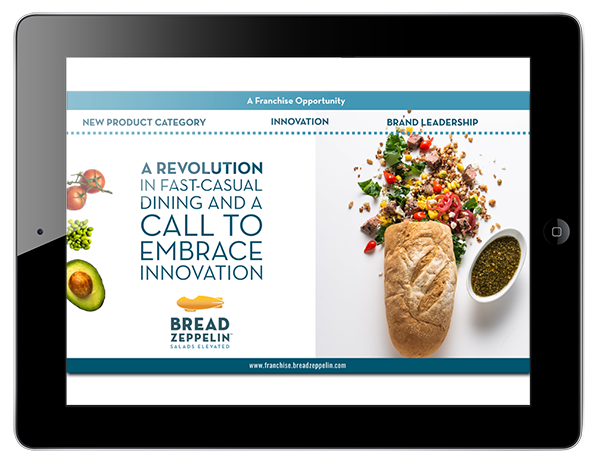
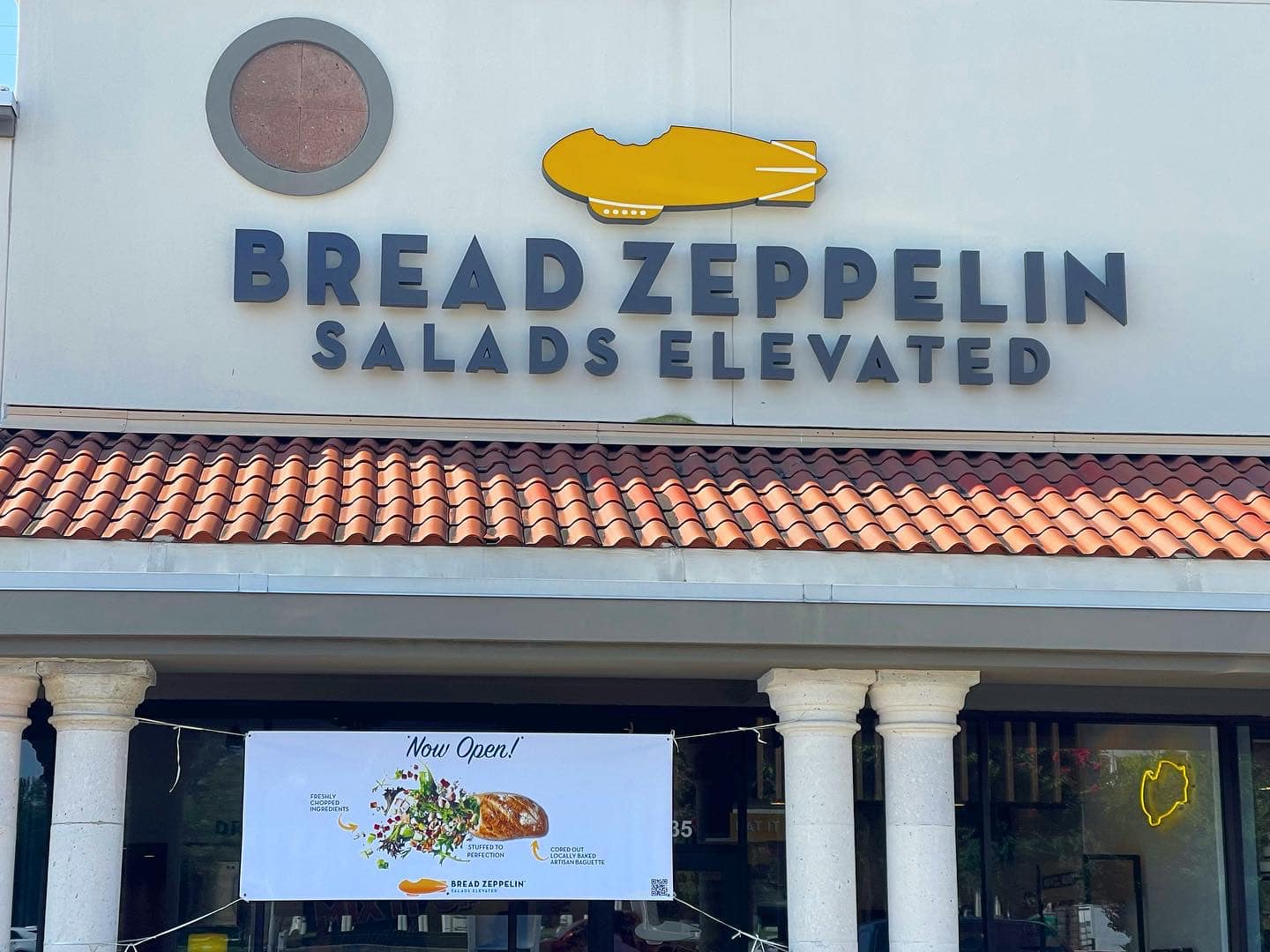
Bread Zeppelin centers on the Zeppelin: a customer-built chopped salad served inside a hollowed, toasted artisan baguette. It is a salad and a sandwich in one order, combining freshness with portability.
The menu builds around a shared prep line of fresh proteins, vegetables, and locally baked bread. That assembly supports portion control and consistent ticket times while reducing waste. For operators, it means a model that scales without adding complexity.
For investors evaluating a sandwich franchise opportunity, Bread Zeppelin sits at the intersection of the sandwich and salad segments, aligned with the shift toward health-conscious dining. Explore the signature chopped salad model.
Frequently Asked Questions
What Are the Best Sandwich Franchises?
The best sandwich franchise depends on your investment goals and operational strengths. Focus on a concept whose unit economics, brand positioning, and support align with your situation.
How Much Does It Cost to Open a Sandwich Franchise?
Costs vary widely by brand and format. The franchisor’s FDD discloses the franchise fee, total initial investment, and ongoing fees, which are the real numbers you need before making a decision.
Are Sandwich Shops Profitable?
Profitability depends on unit economics: food cost control, labor efficiency, average ticket, and location. Check the financial performance representation in Item 19 of the FDD and talk to current franchisees.
What Is the Most Popular Sandwich Chain in the US?
According to the 2026 Technomic Top 500, Subway is the largest U.S. sandwich chain by unit count, though it has closed more than 8,300 domestic restaurants over the past decade.
What Should I Look For When Evaluating a Sandwich Franchise?
Read the FDD closely, protect your 14-day review window, talk to current franchisees, and assess whether the brand offers real differentiation in a crowded market.
Explore a Fresher Way Into the Category
Evaluating a sandwich franchise means studying the market, the numbers, and the differentiation that sets one concept apart. The sandwich franchise opportunity is there for investors who do the work.
Bread Zeppelin offers a distinct path: a health-forward, dual-format concept built around a memorable product. If you are a qualified multi-unit investor, learn more about our franchise ownership opportunity.